
Going Back to Koh Samui
1. First Arrival
Some people say it’s a mistake to return to a place you once loved deeply. Perhaps. But the temptation remains, even when you know what you loved is gone.
I arrived in Thailand in 1973 overland from Ireland, with a rucksack on my back and my money almost gone. By a stroke of luck, I found a teaching job in a country where jobs for foreigners were almost non-existent. Everything was brilliantly new: the way people related to each other and to me, their courtesy, their gestures, their food, their philosophy of life. I marvelled at what I was learning and thought I might stay forever.
While waiting to start work, I asked where I might explore. Koh Samui was mentioned as a laid-back island. At the Mosquito Bar in Klong Toei — which had a reputation as one of the wildest sailors’ bars in the world — I found a small cargo boat to take me. They carried construction materials down and returned with copra and coconuts.
2. The Journey South
In the years that followed, I made many visits. I loved both the island and the journey down. I would take the bus or train from Korat to Bangkok, spending a few days in a city that felt freer and less frenetic than it later became. There were new tastes in food, bars with behaviour I had never seen before, and curious and bizarre people wanting to know me. There was a sense that ‘anything and everything goes’. It was a fun city.
There was the overnight train from the attractive central train station, Hua Lamphong, to Surat Thani. Opened in 1916 in an Italian neo-Renaissance style, the station had decorated wooden roofs and beautiful stained-glass windows. It was cool inside.
I would sit by the open window of the train going south, feeling my face caressed by the warm night air and observing the night scenes. Clusters of lights flashed by occasionally, or darkened temple compounds circled by strings of rainbow-coloured bulbs. The train swung left and right, following the sinuous rail and allowing the light of the moon, when there was one, to splash on my face first from one side of the carriage, then the other.

I always ate fried rice with a deep-fried crispy egg on top and drank a small bottle of Mekong whiskey mixed with unsweetened fizzy soda, or a Singha beer. Piercing the egg, I liked to watch the yolk run down the sides of the piled-up rice. A few spoons of fish sauce mixed with the small, chopped-up, seedless chillies, and I ate leisurely and with pleasure, listening to the noises of the train and the night, feeling like a king.
There would always be someone in the small dining car who wanted to talk: usually someone with little English, and I with less Thai. Afterwards, I would go to sleep with the old-fashioned clickety-clack of the wheels lulling me off.
3. A Sense of Peace
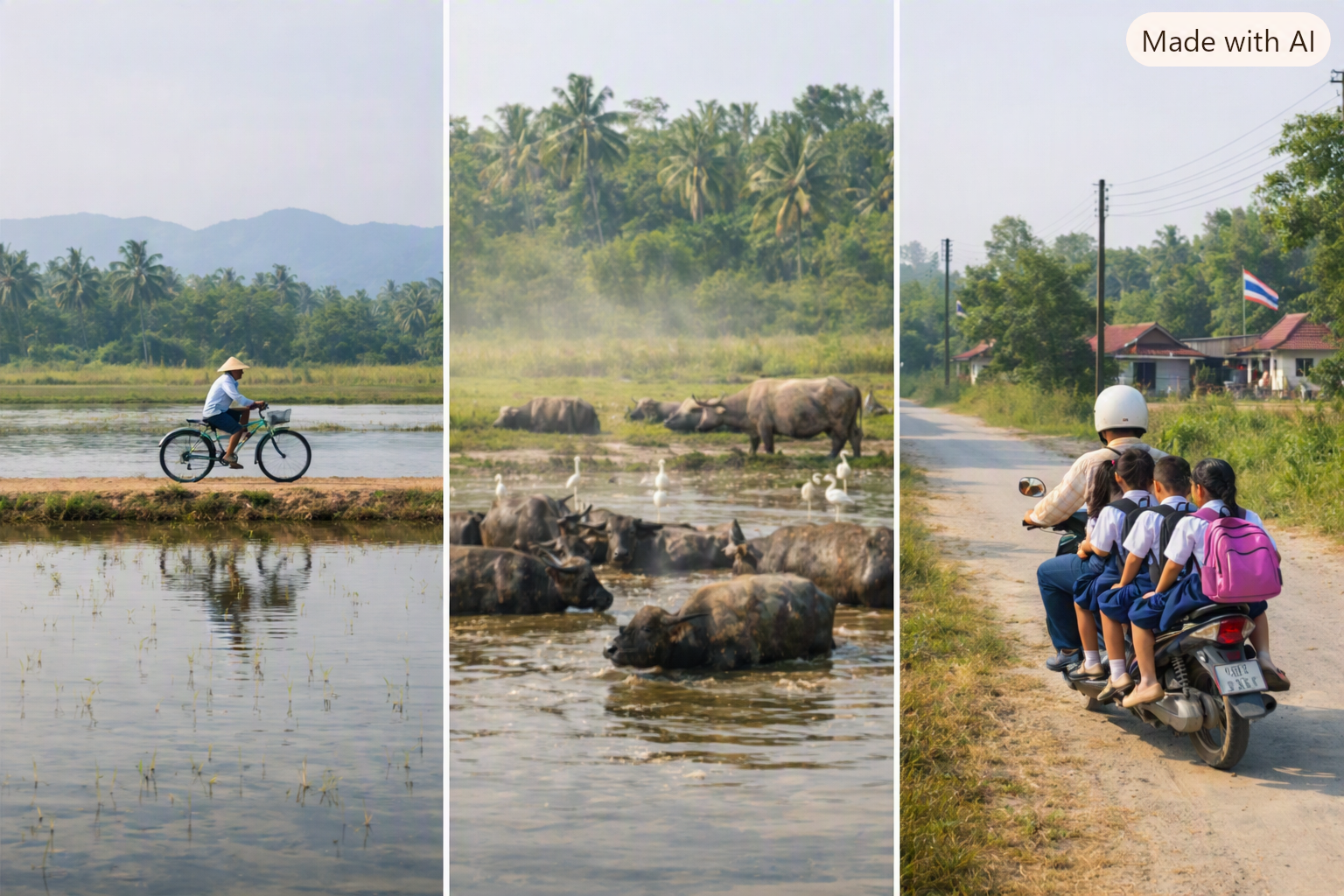
In the early morning, I would stand at the door of the slow-moving train and watch the passing landscape. I became familiar with the scenes: mud-caked water buffaloes in their paddocks, or with their snouts showing as they wallowed in some pond; tall, elegant coconut trees arching in the wind; a man cycling on the narrow ridge between flooded paddy fields; the delicate, almost translucent green of the paddy fields before harvest; a parent bringing three small children to school on a little scooter.
I felt at peace in those moments, as an inner voice whispered that it was for these instants that one travelled.
4. Returning, Decades Later
I left Thailand at the end of the seventies and returned in the late nineties, wanting to see Koh Samui again, knowing it had changed.
The ferries were gone; speedboats brought young tourists here and there. The wooden pier had been replaced by a concrete one. The Chinese hotel and the ugly three-storey concrete one had vanished. The village of Nathon was a hive of noise and activity.
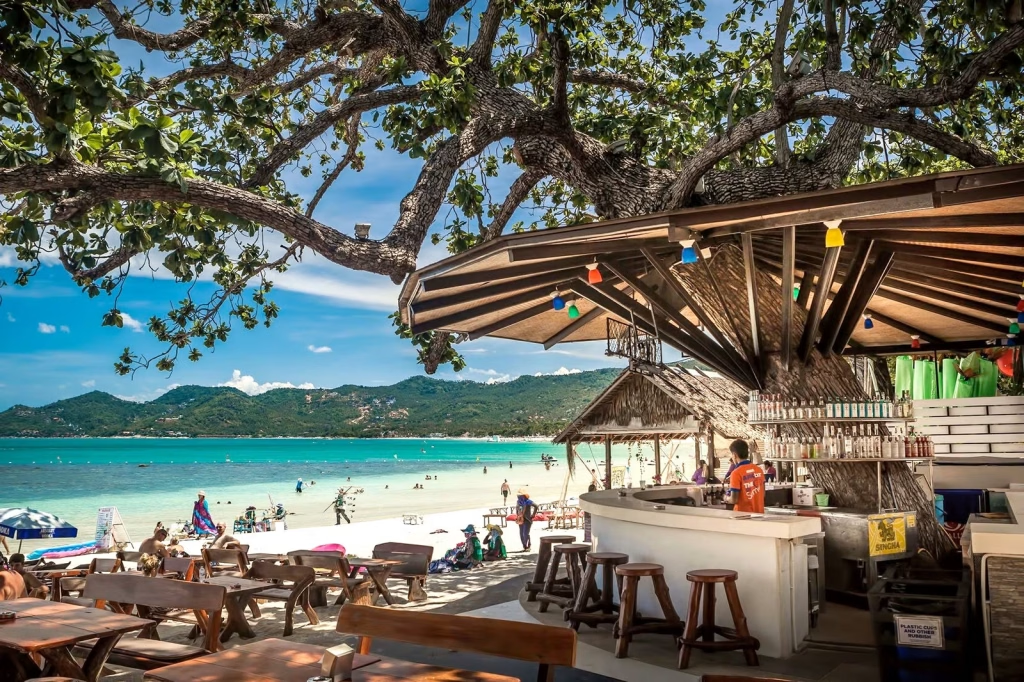
I went to Lamai. It had become garish and gaudy. From end to end there was a string of bars, restaurants and cabins. It was 11 a.m. and already the noise was loud. Each bar played strident music, louder than the others; many young Western tourists were already drunk — a party mode that lasted all day.
There were many services advertised: massages, sightseeing, snorkelling, diving, palm-reading, Buddhist meditation, Thai language courses and others. Many languages were being spoken.
More people were enjoying the beach, in their different ways, than in the 1970s. But it was sad to think that they would never see the place in its unspoiled beauty, with its simple background music of waves and the wind whispering through the coconut fronds.
5. The Door
On my last evening, wandering through Nathon at dusk, unable to find anything familiar, I suddenly froze. On a tin-roofed shack was a carved wooden door — the door of the old hotel.
I knocked. The boy from the hotel — now a man — who opened it recognised me instantly, as I did him. He had stayed on the island, working for the electricity company. The family had sold the hotel and moved to Bangkok. He had kept the door.

It looked incongruous on the hut, but seeing it again brought back memories of a simpler island, a more innocent time.
6. Why Go Back?
Thailand changed my life radically. I left broken-hearted, my own making. The dream of staying forever had turned to dust. Yet I had to go back, marvelling that almost nothing remained of the places — neither on the island nor in Bangkok — where I had been happy.
I feel I just went back – as I had promised myself I would the night I left in 1978, – to say thank you.
I